
A plea has been filed in the Supreme Court for initiation of contempt proceedings against the Securities and Exchange Board of India (SEBI), alleging it has violated the timeline for completing the investigation and submitting its report on the allegations of stock price manipulation by the Adani group. An application has been filed by PIL petitioner Vishal Tiwari saying that despite the deadline given to the SEBI it has failed to comply with the direction of the court and has not submitted the final conclusion/report as was directed by the court. It said by the order dated May 17, 2023, the apex court directed SEBI to submit its report till August 14, 2023.

'We believe 2017 could see higher flows from foreign institutions as money comes back to growth markets like India.'

'Investors hate uncertainty and the demonetisation move certainly creates that.'

Sentiment remains broadly supported on strong foreign buying in Indian markets, especially in debt.

Investments in Indian capital through participatory notes (P-notes) rose to Rs 1.02 lakh crore till October-end, making it the highest level in 43 months.

'As our per capita income increases and various demographic segments emerge, the need for various kinds of protection and risk covers will become even more explicit.'

A'Market valuation is another concern.'
'India is trading at steep valuations and there have been a number of IPOs, especially in the insurance sector, that have had an impact on secondary market liquidity.'

'The potential headwind is that the Indian economy is likely to see a slowdown in growth rates over the next two years.'
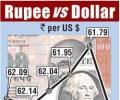
The partially convertible rupee closed at 62.16/17 per dollar compared to 61.79/80 on Tuesday. Financial markets were closed on Wednesday for Christmas.

A key trigger for the increased retail participation in equities has been the lockdown triggered by Covid-19 that saw investors channelising their savings to capital markets in search of better return on their investments and the need to increase their disposable income.


Dalal Street investors became richer by more than Rs 16.36 lakh crore this year as the equity market scaled new highs despite persistent geopolitical uncertainties and inflation worries. Analysts attributed better macroeconomic fundamentals, the confidence of retail investors and foreign investors investing again in the domestic equities towards the latter half of 2022 as the key factors that led to the outperformance of the Indian market in comparison to many other stock markets worldwide. During the initial part of the year, markets were jolted by the Russia-Ukraine war.

More companies are harbouring aspirations to go public, following a sharp market rebound after June's nadir. In August, seven companies expecting to raise a cumulative Rs 10,425 crore filed their draft red herring prospectus (DRHP) with the Securities and Exchange Board of India (Sebi). The amount they are looking to mop up is the highest since March, when 13 companies filed their DRHPs to raise a combined Rs 19,494 crore, reveals data provided by PRIME Database - a source of comprehensive information on all capital market offerings.

In 2020-2021, the amount of foreign direct investment into India from China and Hong Kong plummeted to just $200 million -- its lowest in the recent past. In the first half of 2021-2022, FDI investments through these two nations stood at just $36 million.

A delay in US Federal Reserve's quantitative easing tapering, coupled with better-than-expected September quarter earnings, ensured FIIs kept foreign money flowing into Indian equities.

The value of the foreign portfolio investors' (FPI) holdings in the domestic equities reached $667 billion in three months ended September 2021, a surge of 13 per cent from the preceding quarter, according to a Morningstar report. This was largely on the back of strong performance by the Indian equity markets along with net inflows from FPIs at the later part of the quarter. "At the end of the quarter ended September 2021, the value of FPI investments in Indian equities shot up sharply to $667 billion, which was considerably higher than the $592 billion recorded in the previous quarter, a spike of around 13 per cent," the report noted.

The total value of holdings of domestic institutional investors as a percentage of the value of FII holdings has reached its highest level in four years.

The challenge for the RBI in 2024 is likely to be less about containing elevated inflation and more about curbing excessive financial market exuberance and a 'problem of plenty', notes Sajjid Chinoy, Chief India Economist JP Morgan.
Overseas investors, as well as other key stakeholders, such as brokers, custodians, and clearing corporations, are yet to iron out critical issues, even as the shift towards a shorter trade settlement cycle approaches new phases. Several industry players said foreign portfolio investors (FPIs) are still facing impediments over the trade confirmation timelines, foreign exchange (forex) bookings, and pre-funding requirements. This could potentially act as a roadblock when it comes to moving entirely to the new T+1 settlement cycle from next year.
P-notes are issued by registered Foreign Portfolio Investors (FPIs) to overseas investors who wish to be a part of the Indian stock market without registering themselves directly. They, however, need to go through a due diligence process. According to Securities and Exchange Board of India (Sebi) data, the value of P-note investments in Indian markets -- equity, debt, and hybrid securities -- stood at Rs 90,580 crore at April-end, compared to Rs 87,979 crore in March.

Traders will continue to focus on the measures new Prime Minister Narendra Modi-led government will take to bring down the fiscal deficit and fight inflation.

Reliance Industries, the Tata group, Bharti Airtel and Aditya Birla are among Indian conglomerates that have hedged their revenue and costs linked to the US dollar, giving them financial cover as the rupee fell past 80 against the greenback on Tuesday.

'In the overall global portfolio, India's weighting has come down in the past seven months.'

Elaborating on this theme, Petroleum Minister Dharmendra Pradhan pointed out that if the power sector had not been opened up through reforms initiated in 2003, India would still have been in darkness.

'A soft landing of the Indian economy would be a long-term positive for the equity markets.'

In spite of a massive jump in the number of the uber rich and rich becoming richer, their contributions to charity continued to decline during the COVID-19 pandemic when a whopping 200 million-plus were forced into poverty, says a report. While CSR (corporate social responsibility) spends have increased from 12 per cent in FY15 (two years into mandatory CSR spends) to 23 per cent in FY21, charity by the uber rich slipped from 18 per cent of the total funding in FY15 to a paltry 11 per cent in FY21, says global consultancy Bain & Company and charity-focused domestic consultancy Dasra in their India Philanthropy Report 2022. The report said that donation from private foreign companies has contracted from around 26 per cent in overall private giving in FY15 to around 15 per cent in FY21.

In New York, the dollar was up last Friday against its major rivals following weak German economic data.

Overall, the MF industry saw nearly Rs 5 trillion, or 18 per cent, of asset erosion in March, with the asset base shrinking to Rs 22.26 trillion from Rs 27.22 trillion at February-end.

The Securities and Exchange Board of India's (Sebi's) board on Wednesday allowed foreign portfolio investors (FPIs) to trade in exchange-traded commodity derivatives. The move, it said, "will enhance liquidity and market depth, as well as promote efficient price discovery." Overseas investors will only be allowed to deal in non-agricultural commodity derivatives and only cash-settled contracts.

The primary market is set for a bumper Rs 80,000-crore bonanza with 30 companies already filing IPO papers to raise Rs 55,000 crore, while around 10 more are lined up for this month itself, seeking to mop up another Rs 25,000 crore, say investment bankers. The market has been on a non-stop rally, hitting new records almost every week, on the back of an influx of investors -- a vast majority of them first-timers -- coupled with a flood of liquidity. Foreign funds alone had pumped in a record $35 billion into the market in FY21, while the trend has continued this fiscal as well. Domestic institutions led by LIC have also infused trillions of rupees, helping woo retail investors in troves -- the year saw over 20 million new investors coming to the market.

Dealers attributed the fall in rupee to gains made by US dollar against the euro and other overseas currencies ahead of US jobs data and a lower opening in the domestic equity market.

To combat terror financing, India and the US committed to work together to check illicit money transfers.

A whirlwind trip of the dark underbelly of global finance, covering everything from tax law changes to aiding criminals to decamp with money from bank accounts.

'We remain positive on technology, private sector financials, gas, infrastructure, and export-oriented plays.'

Young investors could allocate in the proportion of 70:20:10 to equity, debt and gold.

Dollar's strength and falling crude oil prices force downward revision of 2015 growth forecast.

Mutual funds (MFs) are set to be net sellers of Indian equities for the first time in the past seven financial years, having sold stocks worth about Rs 1.27 trillion so far in 2020-21 (FY21), making it the highest net sales on record in a financial year. MFs had been net buyers in the previous six financial years, including purchases of over Rs 1.41 trillion in FY18, Rs 88,152 crore in FY19, and Rs 91,814 crore in FY20. The last time they offloaded Indian equities was in FY14, when they net sold stocks worth Rs 21,159 crore. In contrast, foreign portfolio investors (FPIs) have ramped up buying in FY21, purchasing more than Rs 2.6 trillion worth of shares.


Gautambhai has shown that he has ability to withstand payment delays or vexatious court cases. That is where he is on a more comfortable wicket than many others. A revealing excerpt from R N Bhaskar's Gautam Adani: Reimagining Business in India and the World.

Equity inflows worth $3.7 billion came from the sunny Caribbean jurisdiction in 2019-20, a 267 per cent increase from the $1 billion registered in 2018-19 making it India's 10th largest source of FDI.
